


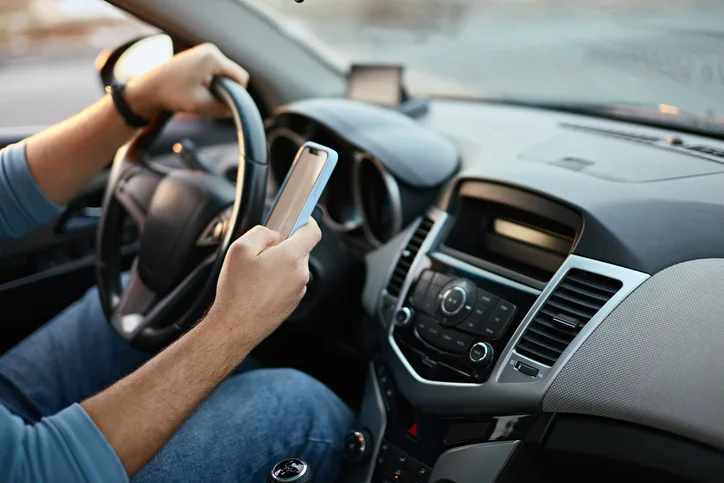
Distracted driving can turn an ordinary trip through Brownsville into a serious crash in a matter of seconds. A driver may look down at a phone, reach for something inside the vehicle, adjust an electronic device, or focus on something other than the roadway. Even a brief lapse in attention can affect a driver’s ability to recognize traffic conditions and respond in time.
When another driver’s distraction contributes to a crash, an injured person may have questions about whether the driver can be held responsible for the resulting injuries and losses.
The answer depends on the facts of the collision and the evidence available to establish what happened. A distracted driving claim is not simply about proving that the other driver owned or used a phone. The circumstances must connect the driver’s conduct to the crash and the resulting injuries.
Amador Law Firm represents motor vehicle accident victims in Brownsville and throughout the Rio Grande Valley, including people injured in crashes involving distracted driving. (Amador Law Firm)
What Counts as Distracted Driving in a Brownsville Crash?
Distraction can take several forms. Visual distraction occurs when a driver takes their eyes away from the roadway. Manual distraction occurs when a driver removes their hands from the controls. Cognitive distraction occurs when a driver’s attention is focused somewhere other than on driving.
Phone use is one recognizable example, but distracted driving is not limited to texting.
A driver may become distracted while:
- Reading or sending a message.
- Looking at a navigation application.
- Reaching for an object.
- Adjusting a device.
- Looking at something happening inside the vehicle.
- Eating or drinking.
- Focusing on passengers instead of traffic.
- Performing another activity that interferes with attentive driving.
Texas law specifically prohibits certain uses of portable wireless communication devices while operating a motor vehicle. Section 545.4251 of the Texas Transportation Code addresses reading, writing, or sending electronic messages while operating a motor vehicle, subject to specified exceptions. (Texas Statutes)
However, a civil injury claim and a traffic offense are not necessarily the same question. A person injured in a crash may need to establish the driver’s negligence and the connection between that conduct and the injuries suffered.
How Can You Prove That a Driver Was Distracted?
One of the most difficult parts of a distracted driving claim may be determining what the other driver was doing immediately before the collision.
The driver may deny using a phone or claim that they were paying attention. This is where independent evidence can become important.
A crash investigation may consider the police report, statements from witnesses to the collision, photographs, traffic-camera footage, surveillance footage from nearby businesses, dashcam recordings, vehicle data, and physical evidence from the crash scene.
In some circumstances, electronic records may also become relevant. Whether such information can be obtained and used depends on the facts of the case and applicable legal procedures.
Witnesses can be particularly valuable. Someone in another vehicle may have seen the driver looking down immediately before the crash. A pedestrian or person near the roadway may have observed the driver’s behavior. A passenger may also have information about what occurred inside the vehicle.
The goal is not simply to show that a driver had a phone. It is to develop evidence regarding the driver’s actions and whether they contributed to the collision.
What If the Driver Was Distracted but Claims the Crash Was Your Fault?
A distracted driver may still argue that another person caused or contributed to the collision.
For example, the driver or an insurance company may dispute who had the right of way, whether a traffic signal was followed, how quickly each vehicle was traveling, or whether another action contributed to the crash.
Texas law permits responsibility to be apportioned in appropriate cases. If an injured person’s own conduct is alleged to have contributed to the incident, that issue can become part of the claim. (Texas Statutes)
That makes a complete investigation important. The fact that another driver was distracted does not eliminate the need to examine the entire collision.
Evidence should establish what each driver did, the roadway conditions, how the vehicles moved, and how the collision occurred.
Why Does the Brownsville Location Matter?
Brownsville drivers regularly share local roads with passenger vehicles, commercial traffic, pedestrians, motorcycles, and other road users. The firm also represents clients throughout the Rio Grande Valley, where crashes can occur on local streets and major highways such as I-69E and US-77. (Amador Law Firm)
The location of a collision can affect what evidence may exist.
For example, a crash near a commercial area may be captured by surveillance cameras from nearby businesses. A collision at an intersection may involve traffic signals, roadway markings, witnesses, or other sources of information. A crash on a larger roadway may involve additional vehicles or commercial traffic that could provide witnesses or dashcam footage.
This does not mean every Brownsville crash will have the same evidence. Instead, the specific location should be examined quickly to determine what information may be available.
What Should You Do After a Distracted Driving Crash in Brownsville?
If you are involved in a crash, first seek appropriate medical attention and contact emergency services when necessary.
If you can safely do so, document the scene. Photographs of the vehicles, roadway, traffic signals, surrounding area, and visible injuries may help preserve information about the collision.
Obtain the other driver’s identifying and insurance information and collect contact information from witnesses when possible. Avoid admitting fault or making statements about the cause of the collision before all the facts are known.
You should also seek medical care even if your injuries initially appear minor. Some crash-related injuries may not become apparent immediately, and medical documentation can help establish the nature and timing of your injuries.
Do not assume that the evidence will remain available indefinitely. Traffic footage can be overwritten, vehicles may be repaired or moved, and witnesses’ memories can become less precise with time.
How Can a Brownsville Personal Injury Attorney Investigate a Distracted Driving Claim?
A distracted driving case may require an investigation into both the driver’s behavior and the mechanics of the crash.
Amador Law Firm states that its motor vehicle accident investigations may involve police reports, eyewitness interviews, traffic-camera or dashcam footage, vehicle damage, and other evidence used to establish liability. (Amador Law Firm)
An attorney can also communicate with insurance companies on your behalf and evaluate the damages associated with the injury. Depending on the circumstances, those damages may include medical expenses, lost income, diminished earning capacity, and other losses associated with the crash.
Car Accident Lawyer in Brownsville, TX
If you were injured in a Brownsville crash and believe another driver was distracted, Amador Law Firm can review the circumstances and help you understand your legal options. Contact Amador Law Firm at (956) 903-2260 to discuss your potential motor vehicle injury claim.